Your quote list
Review products and quantities, then request a quote.
Your quote list is empty.
Review products and quantities, then request a quote.
Your quote list is empty.
Home / Catalog / Liquid Storage & Transport
IBC totes, storage tanks and ISO tank containers — each with its own selection path. Compare options and request pricing.
Prior food-grade use describes history, not current food-contact suitability. Reconditioned preparation can be requested on the IBC page.
Reviewed by Ryan Penick, Operator, Wholesale Industry LLC · Updated October 2026
Liquid storage and transport containers from Wholesale Industry follow three separate paths: caged IBC totes in 275 and 330 gallon sizes, used storage tanks including Snyder Square Stackables, Ultratainers and 1,000 and 2,500 gallon tanks, and ISO tank containers for intermodal liquid transport. Each is quoted against your contents, site and quantity.
The right liquid container depends on volume, whether it needs to move, and what it will hold. This department keeps the three product families apart because the questions you need to answer for each are different.
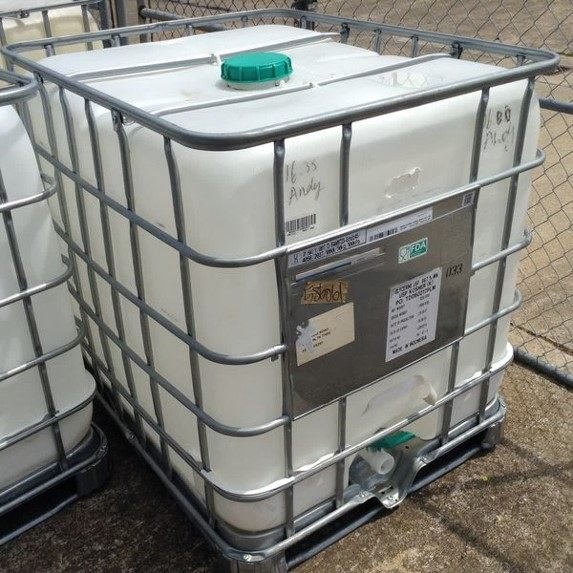
Caged IBC totes in 275 gallon and 330 gallon sizes, used or rinsed, each with food-grade or non-food-grade prior-use history.
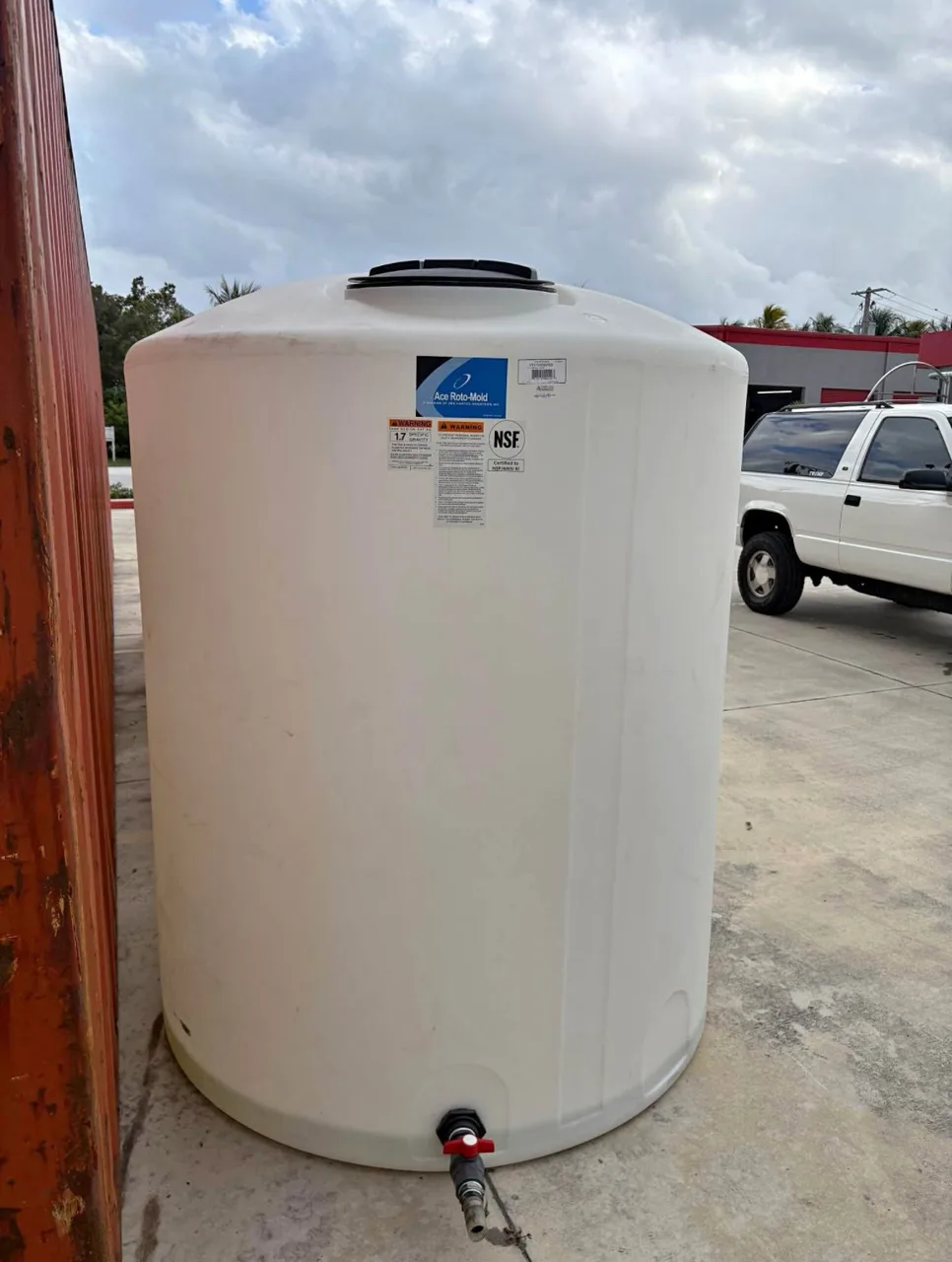
Used tanks: Snyder Square Stackables, Snyder Ultratainers, 1,000 gallon tanks and 2,500 gallon tanks.
ISO tank containers for road, rail and sea, including T11 tanks and other T-code specifications.
| Family | Capacity range listed | Mobility | Best fit |
|---|---|---|---|
| Caged IBC totes | 275 and 330 gallons | Moved by forklift or pallet jack; stackable when empty and within the unit's label rating | Plant storage, batch transfer, agriculture, resale lots |
| Snyder Square Stackables and Ultratainers | Confirmed by model | Portable all-plastic units | Users who want a rigid tank in a compact footprint |
| 1,000 and 2,500 gallon tanks | 1,000 and 2,500 gallons | Placed once and filled in place | Fixed storage at farms, plants and job sites |
| ISO tank containers | Confirmed by specification | Intermodal: chassis, rail and vessel | Long-distance liquid transport and export |
IBC totes are the most flexible option for moving liquids around a site. Choose capacity first, then condition, then prior-use history. On this site, used totes are sold as returned from service and rinsed totes have had a rinse; rinsing alone is not a full reconditioning, and you can request specific preparation if your application needs it. Food-grade history means the tote previously held food or ingredient products. It describes history, not present suitability for food contact or drinking water, so confirm the previous contents and preparation for your use. For a deeper look at caged totes, see our dedicated IBC tote site.
Tanks are quoted around a site layout rather than a catalog size alone. Snyder Square Stackables and Ultratainers are rigid plastic models with their own footprints and fittings, so share the model or capacity you need. Larger 1,000 and 2,500 gallon tanks are used units sourced to a request; shape, material, history and dimensions are confirmed for the actual tank offered. Measure the pad, door openings and delivery path before you request a quote.
A T-code describes a portable tank specification, not a size. T11 is widely used for many liquid products, while other T-codes cover different pressure and design requirements. Start with the intended contents and the specification your shipments require, then confirm capacity, connections, heating needs and the inspection and test records that must travel with the tank.
Liquid containers are heavy when full, so plan handling before you order. A filled IBC tote needs a forklift or pallet jack rated for the load and a level, solid surface; check the label on the actual unit before stacking filled totes. Fixed tanks need a prepared pad sized to the tank and clear access for the delivery vehicle and any lifting equipment. ISO tank containers arrive on a chassis and need room for the truck to position and, if the tank is dropped, the equipment to lift it.
Think about the discharge end as well. Note the outlet size and type your pumps, hoses or process lines use, and whether you need adapters. Accessories such as covers and hose adapters are listed under IBC accessories and can be added to the same quote.
With any used liquid container, your contents decide what is acceptable. Ask what the container last held, what cleaning was done and whether gaskets, valves or caps have been replaced. Containers are sold empty. If you plan to ship hazardous materials, confirm the container's markings and current periodic test and inspection status for that service before purchase rather than assuming a used unit qualifies.
Send the container family, capacity or model, condition, prior-use preference, quantity, intended contents and delivery ZIP through request a quote, or call 855-964-2534. IBC totes can be picked up by arrangement in Pennsville, NJ or Tampa, FL; LTL freight is quoted to your ZIP and truckloads are quoted individually. Short-term needs can go through rental and leasing.
Used totes are sold as returned from service. Rinsed totes have been rinsed, but rinsing alone is not a complete reconditioning and does not establish suitability for a particular material. If you need specific cleaning, component replacement or documentation, request reconditioning and describe your requirements so the offered totes can be checked.
No. Food-grade history means the tote previously held food or ingredient products. It describes where the tote has been, not its present suitability for food contact or drinking water. Confirm the previous contents, the preparation performed and any regulatory requirements for your application before use.
Choose a larger tank when you want a single fixed vessel and the site can accept it. Choose IBC totes when volume needs to move with a forklift, be split across locations or scale up and down. Snyder Square Stackables and Ultratainers sit between the two as rigid portable units.
T11 is a portable tank specification code that sets design and test requirements for the tank. It does not describe a single capacity or say that a tank suits your product. Confirm the intended contents, required specification, capacity, connections and the inspection records you need before ordering.
Yes. List each item, its condition, capacity or model and quantity, and give one delivery ZIP. The quote covers each line and the freight for the shipment. Larger tanks and ISO tank containers may ship separately because of their size, so the quote shows how each item moves.
Yes. Use the quote form to describe the quantity, location, tote sizes, previous contents and condition, and say whether the totes are empty and whether any rinsing or reconditioning has been done. The details are reviewed and an offer is discussed with you, including pickup arrangements.