Your quote list
Review products and quantities, then request a quote.
Your quote list is empty.
Review products and quantities, then request a quote.
Your quote list is empty.
Home / Catalog / Handheld Collapsible Containers
Knockdown containers distinct from large bulk collapsible bins. Compare options and request pricing.
Showing 3 of 3 products
Price by quote
New · Monoflo
KD 2415-07
Smaller folding-wall containers for parts and return handling.
Shipping only · freight quoted to your ZIP
Quantity pricing confirmed in your quote.
MOQ confirmed in quote
Subtotal by quote
Nationwide shipping · Freight quoted separately
Price by quote
New · Monoflo
KD 2415-09
Smaller folding-wall containers for parts and return handling.
Shipping only · freight quoted to your ZIP
Quantity pricing confirmed in your quote.
MOQ confirmed in quote
Subtotal by quote
Nationwide shipping · Freight quoted separately
Price by quote
New · Monoflo
KD 2415-11
Smaller folding-wall containers for parts and return handling.
Shipping only · freight quoted to your ZIP
Quantity pricing confirmed in your quote.
MOQ confirmed in quote
Subtotal by quote
Nationwide shipping · Freight quoted separately
Reset your filters or request another size or configuration.
Request a sourcing quote →Availability and freight are confirmed with your quote.
These smaller collapsible containers have their own handling and pallet-system requirements. Compare them separately from large bulk bins and dedicated automation containers.
| Option | What to compare | Include in your request |
|---|---|---|
| Open and collapsed size | Check usable space and the empty-return arrangement. | Footprint, open height and maximum return height. |
| Base and access | Specify the needed bottom and access-door configuration. | Handling method, product access and base requirement. |
| Pallet system | Match the container to the pallet and cap arrangement. | Container model and planned unit-load layout. |
Reviewed by Ryan Penick, Operator, Wholesale Industry LLC · Updated October 2026
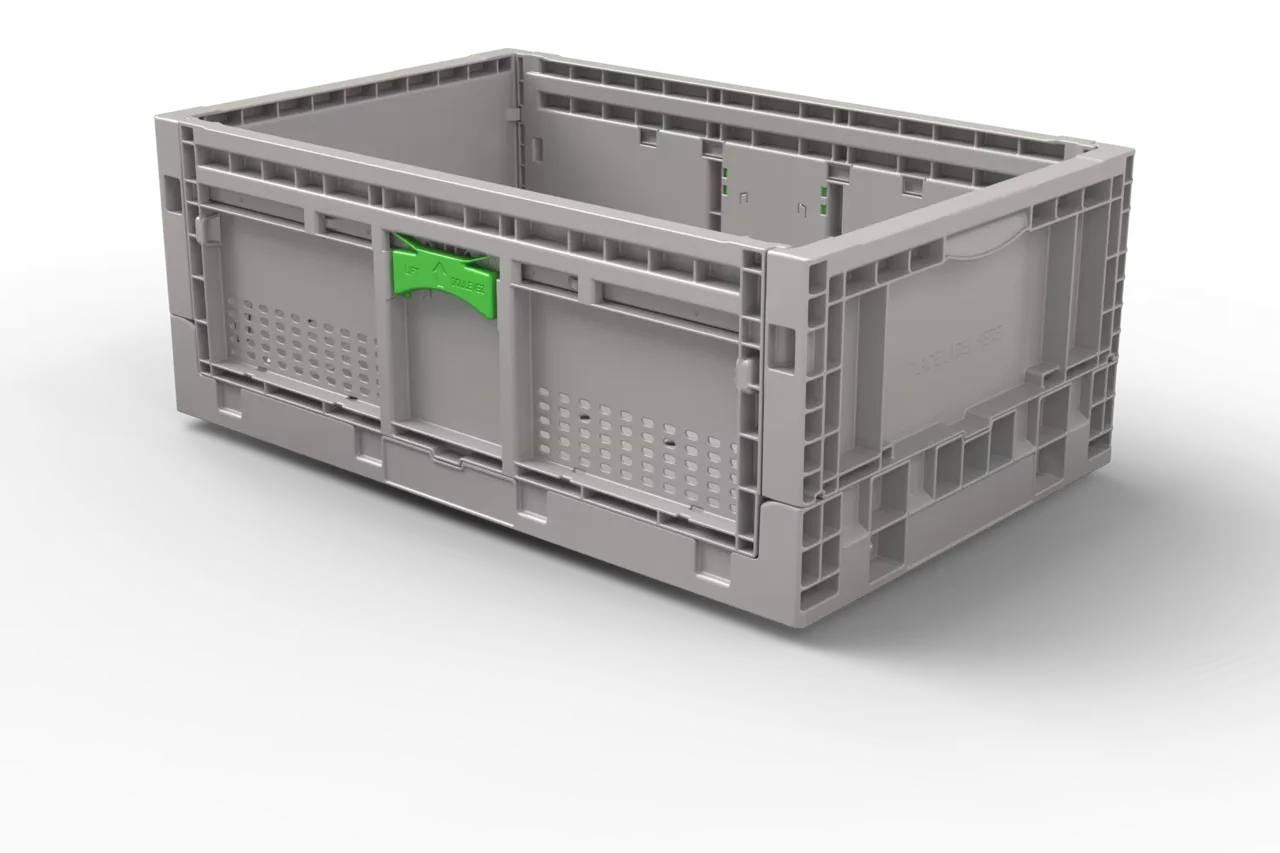
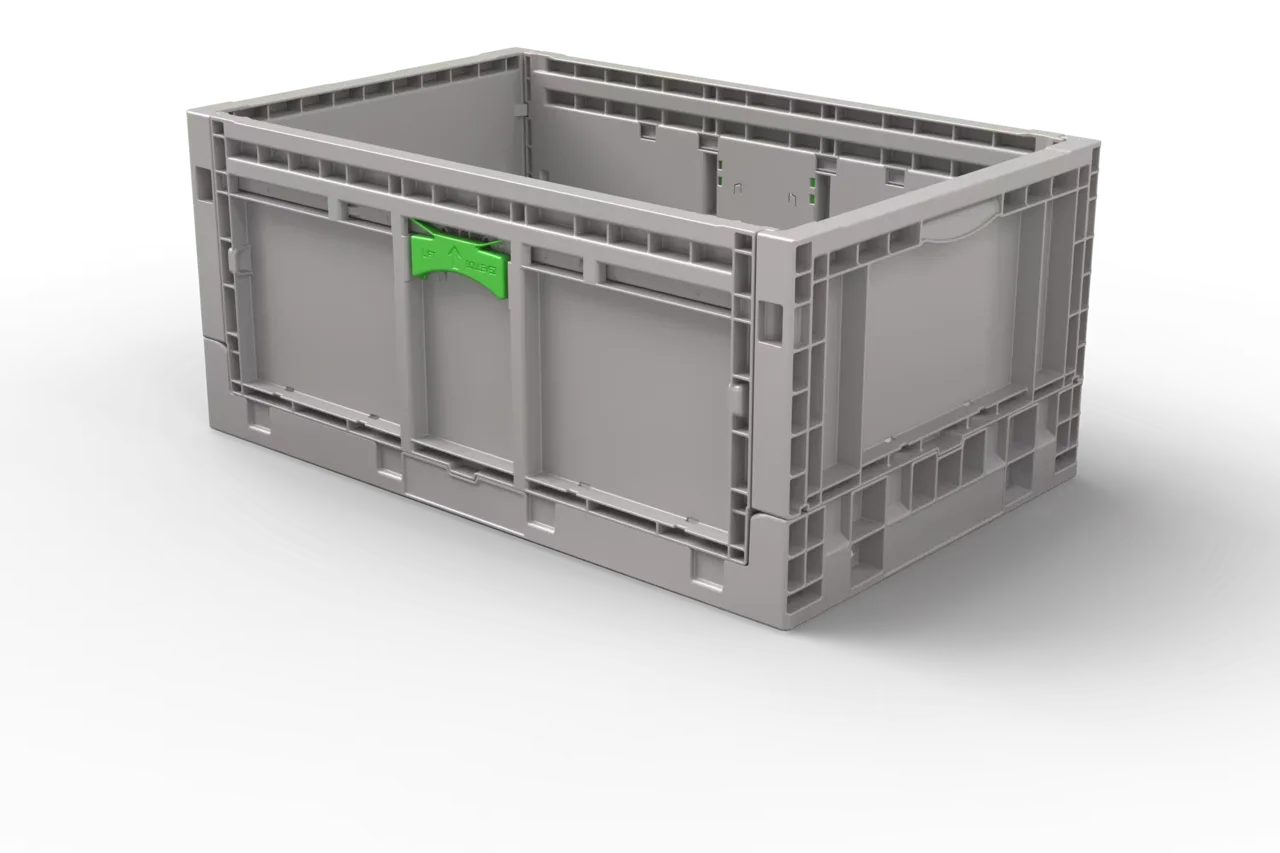
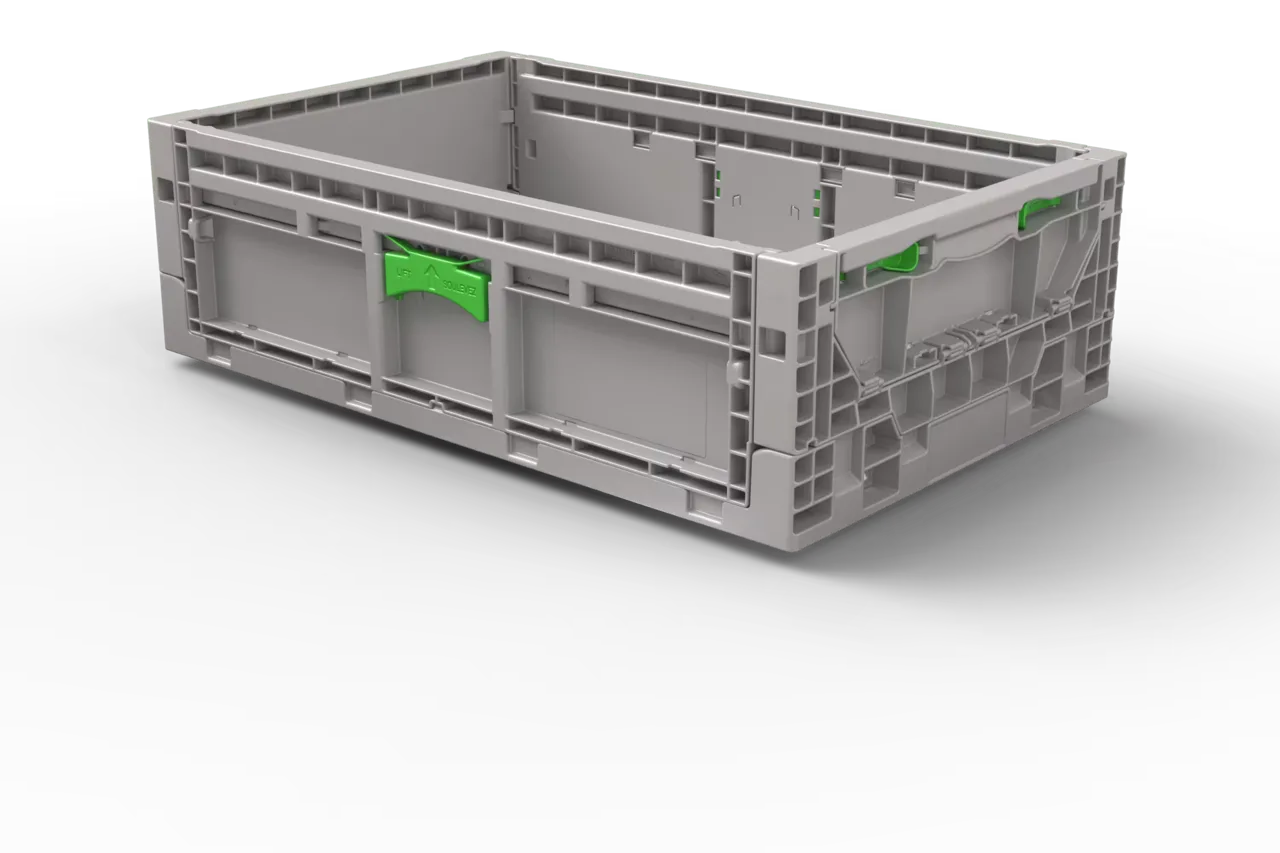
Handheld collapsible containers are small knockdown totes whose walls fold flat when empty, so returnable parts packaging takes up a fraction of the space on the way back. Wholesale Industry quotes the new Monoflo KD 2415 family in a 24 × 15 in footprint at 7, 9 and 11 in tall.
A handheld knockdown container is a one-person tote with walls hinged to the base. Erected, it works like a rigid tote for parts, components or kits. Emptied, the walls fold down onto the base, and collapsed containers stack in a fraction of their operating height. That makes them a fit for supplier-to-plant loops where empty containers travel back on a truck and space on the backhaul has a cost.
This family is different from the two other collapsible ranges in the catalog. Large pallet-sized collapsible bulk containers are moved by forklift, and the 600 × 400 mm automation knockdown containers are built around conveyor and ASRS interfaces. Handheld knockdown containers are meant to be carried and stacked by hand and built into pallet loads.
| Model | Outside size (L × W × H) | Good starting point for |
|---|---|---|
| KD 2415-07 | 24 × 15 × 7 in | Flat parts, small stampings, kits that need a shallow pick |
| KD 2415-09 | 24 × 15 × 9 in | General parts and component returns |
| KD 2415-11 | 24 × 15 × 11 in | Taller or bulkier parts that still need a hand-carried tote |
All three share the 24 × 15 in footprint, so mixed heights can be built into one pallet pattern. The footprint divides evenly into a 48 × 45 in pallet, which is why these containers are often run with a matched pallet and top cap; confirm the layout for your model through the container pallet systems page.
Check the usable interior around your part, and ask for the collapsed height so you can plan how many empties fit on the return load.
Specify a flat or cross bottom for your stacking and conveyor needs, and say whether you need a drop-down access door for picking from a stack.
List label holders, barcodes or other identification so returnable containers can be tracked between your site and your suppliers.
If your containers never leave the building and never need to be emptied for return, a fixed-wall straight-wall container may be simpler; collapsible designs earn their keep when empty space is the cost you are trying to cut.
Plan the fleet around cycle time: containers at the supplier, in transit, in your plant and on the way back, plus a reserve. Agree how suppliers should collapse, stack and band the empties so returns arrive as clean unit loads. Inspect hinges and latches when containers come back, because a wall that no longer locks is the usual reason a knockdown tote is retired.
Because these containers are lifted by hand, the loaded weight matters as much as the volume. A taller container is not always the better buy: an 11 in tote filled with dense metal parts can become too heavy to lift safely, while the same parts split across 7 in containers stay manageable. Set a target loaded weight with your safety team, then choose the height that keeps typical loads under it. Check how high stacks can go before the top container is above comfortable reach, and give operators a consistent way to erect and collapse the walls so latches are not forced.
These are new factory containers with minimum order quantities; minimums vary by product and condition.
Send the model, configuration, quantity and delivery ZIP through the quote request form, or call 855-964-2534. Containers, pallets and caps can be quoted together. Freight is quoted to your ZIP, and availability and tiered pricing are confirmed with the quote.
Handheld collapsible containers are small knockdown totes, here 24 × 15 in, carried and stacked by hand. Collapsible bulk containers are pallet-sized bins handled by forklift. Both fold when empty to save return space, but they are selected, palletized and priced as separate product families.
Three heights are listed in the 24 × 15 in footprint: KD 2415-07 at 7 in, KD 2415-09 at 9 in and KD 2415-11 at 11 in. Ask for the collapsed height and usable interior of the model you choose, and confirm the dimensions with your quote.
Access-door and bottom configuration are part of the selection for this family. Say whether you need a door for picking from a stacked container and whether you need a flat or cross bottom, and the available configuration is confirmed in your quote.
They can be shipped on a standard pallet, but many programs use a matched pallet and top cap so stacks stay square and secure. The 24 × 15 in footprint divides evenly into 48 × 45 in. Confirm the layout and pallet model before ordering.
No. The KD 2415 family is a general handheld range in inches. Automation knockdown containers such as the KD 6040-285 are 600 × 400 mm units built around conveyor and storage-system interfaces. Choose the family that matches how the containers will be handled.